
psychische-gesundheit
Dysfunctional Families: Roles, Patterns and Paths to Healing
A psychologist explains how dysfunctional family roles shape adult relationships, and the small, steady steps that open the door to healing.
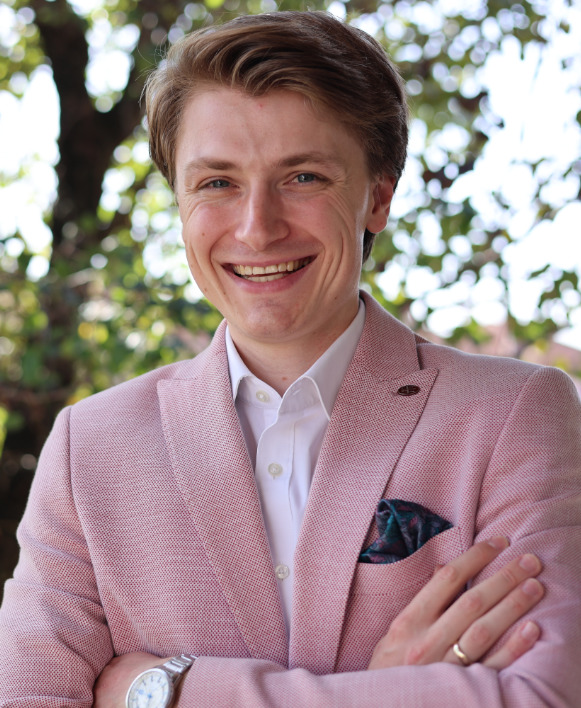
Patric Pförtner M.Sc.
21 May 2026

Dysfunctional Families: Roles, Patterns and Paths to Healing
In my consulting room, I often sit across from adults who carry an invisible weather inside them. They only know that closeness feels both longed-for and dangerous, that small disagreements set off large alarms, and that their own voice goes quiet just when it most wants to be heard. Sooner or later, the conversation turns toward childhood — not to assign blame, but to understand the climate they grew up in.
What Actually Makes a Family Dysfunctional
A dysfunctional family is rarely defined by a single dramatic event. It is defined by patterns — quiet, repeating, year-after-year patterns — that block emotional safety, honest communication, and healthy growth. Every family argues; the difference lies in what comes afterwards. Functional families can repair: they apologise, they listen, they find their way back. Dysfunctional families repeat.
The patterns are not always loud. Some families shout; others freeze. Some drink; others perform a tidy normality while a child slowly learns that certain feelings simply do not exist out loud.
The Common Shapes Dysfunction Takes
Certain patterns appear again and again in clinical work. The addicted family, where alcohol, gambling, work or another dependency sets the daily weather and reliability becomes a lottery. The violent family, where physical, verbal, or emotional aggression engraves itself into the nervous system. The conflict-saturated family, where cold wars run for decades and the child grows up in low-grade vigilance.
Then the emotionally distant family — perhaps the most underestimated form. The basics are provided: food, school, a clean bedroom. But warmth is missing. I remember Stefan, who told me, “My parents were good people. They gave me everything. I just cannot remember either of them ever holding me.” His wife, decades later, called him cold. He was not cold. He was untaught.
Finally, the authoritarian family, where rules replace conversation and obedience replaces relationship. Independence is treated as betrayal.
The Roles Children Take to Survive
Within these systems, children rarely just live. They take on roles — small jobs assigned by an unspoken contract — that keep the family stable, often at the cost of their own development.
The Hero is the high-achieving child who polishes the family image. Inside: chronic perfectionism and a fear of resting. The Scapegoat carries the family’s shame; in adulthood, low self-worth and a private suspicion that something is wrong with them. The Lost Child becomes invisible to stay safe, until the adult version cannot answer a simple question like “what would you enjoy?” The Mascot turns pain into jokes, never learning that seriousness is allowed. The Caretaker, or parentified child, becomes the small adult of the household and arrives in my room, years later, with burnout and a quiet sentence: “I don’t actually know what I need.”
A Vignette: Elena Learns to Stay Visible
Elena was thirty-five when she first contacted me. Her marriage had begun to crack along a familiar line: whenever conflict began, she vanished. Not physically — emotionally. “I just go away,” she said. “I become mute and small. I cannot help it.”
She had grown up as the lost child in an emotionally distant household. To be unseen was, for years, the safest available strategy. It worked then. It was breaking her now.
We worked at three quiet layers. First, awareness: noticing the half-second before she disappeared. Second, micro-expression: not a speech, just one sentence — “I need a moment, I will come back” — practised until it felt possible. Third, boundaries with her family of origin, where the original pattern still lived. After a few months she said, almost in passing, “I am no longer invisible. Not even to myself.”
How These Patterns Reach Into Adult Love
What we learned as children, we live out in love. The child who was never seen struggles to be visible to a partner. The child who carried everyone tries to carry their spouse too. The child who learned that arguments were dangerous either avoids conflict or stages preemptive ones. None of this is character weakness — it is biography wearing the costume of personality.
Michael, another client, put it precisely: “At home, fighting was life-threatening. I learned to withdraw. Now my wife says I disappear like a turtle.” We worked, gently, on staying — on breathing, on saying a single sentence instead of vanishing. Months later, his wife said the words he had quietly waited his whole life to hear: “You are here now, when it gets hard.”
Self-Reflection and When to Seek Support
No checklist will tell you, definitively, whether your family of origin shaped you in ways that still hurt. There are only honest questions, asked slowly. Which topics were unspeakable at your dinner table? Which role did you play, and what did it cost you? When your partner withdraws or comes close, whose voice do you actually hear? Where do your reactions feel out of proportion to the present — and what older moment might they belong to?
If those questions stir something, take it seriously but gently. Notice the small, repeating script and resist the temptation to fix yourself overnight. Healing is rarely a single insight; it is a long apprenticeship in noticing.
There are moments when the work asks for company. If the same painful pattern keeps reappearing in your closest relationships, if old grief surfaces and you have nowhere safe to put it, or if contact with your family of origin reliably leaves you depleted for days, these are not signs of weakness. They are signs that the load is heavier than one person was meant to carry alone. A skilled therapist can hold the other end of it while you learn to set it down. You do not have to choose between loyalty to your family and loyalty to yourself — with time, both can become possible.


